8 Ways We Are Implementing AI for New Opportunities That We Couldn't Before
When I started working on the newsletter High Performance Construction (HPC) – the intent was to blend insights from construction operations with current technology advancements. I figured there would be a lot to uncover with analyzing how teams perform (backed by data after rolling in some new technology), how costs were managed, and how productivity could be increased. Then AI came along, and I stopped posting so I could focus on figuring it out. Here is what this is actually starting to look like in an AI-driven world.
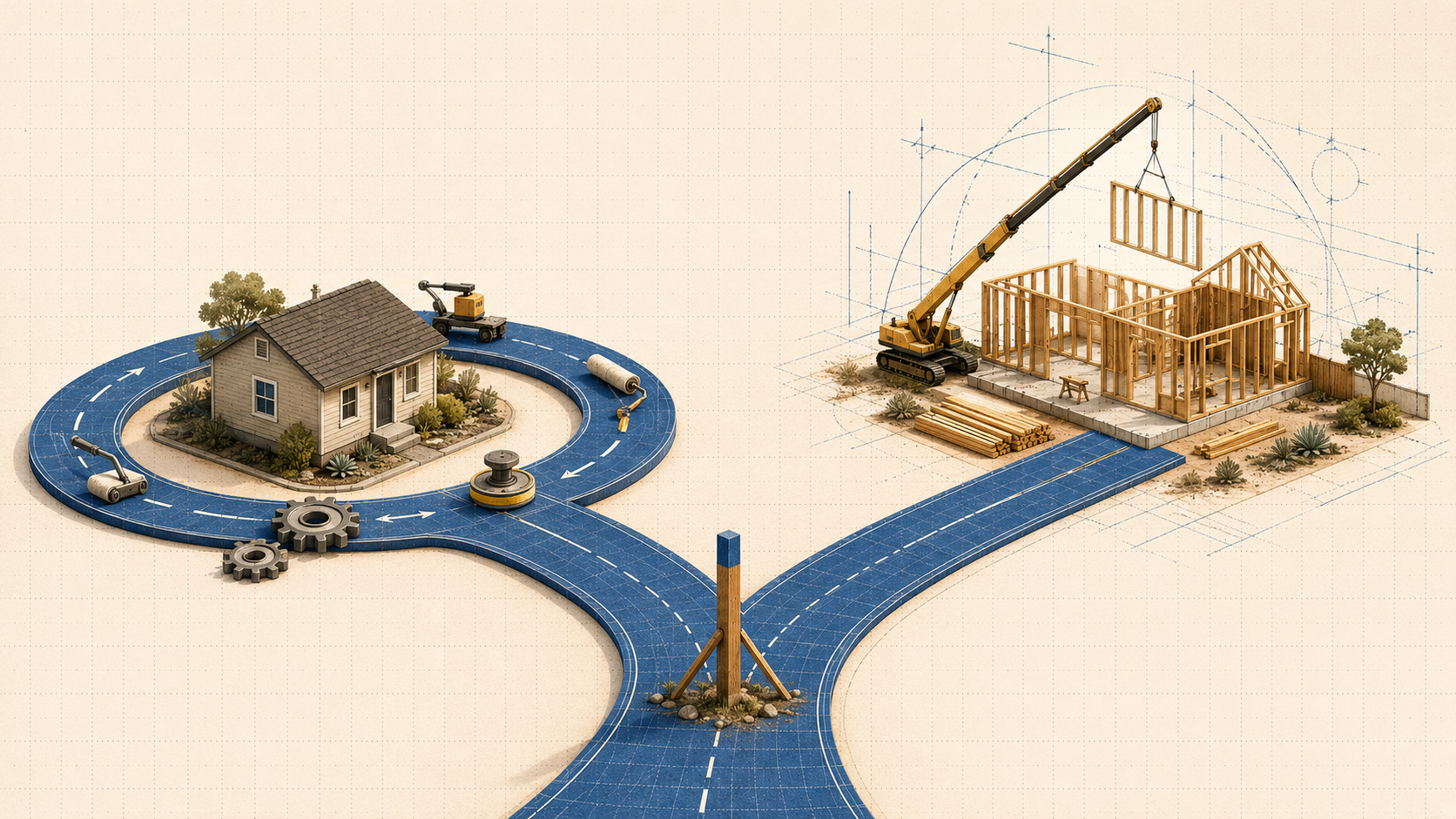
Having been influenced by NLW on The AI Daily Brief podcast, I see AI being used in two main ways to shape what we do:
- Using AI to optimize our processes and workflows. This is positive and should be focused on, but it is also what is driving the fear around loss of jobs, and if we only focus on optimization, then we find ourselves in a race to the bottom against our peers.
- Using AI to do things we couldn't do before. This is also positive and allows us to stretch ourselves in learning and growth and ideally to a more abundant future for all of us. This is the part that the construction industry struggles with because it involves trying new things and change is hard.
With those thoughts in mind, I am sharing some of the ideas and projects I have been working on as a way to expand how our industry can solve some bigger problems. The overall mission and theme for our businesses is solving for housing attainability. Everything we do is geared to creating a smarter way of doing things so that we can optimize and do new things to make a difference in our communities.
We have created a number of new systems and processes, and to add value across the board, we have also created some new business lines out of this. Here is some of what we have been working on and how we think it can contribute:
- Nimble Development
- Operation Alpha
- The Nimble Attainability Index
- The Permit-Friendliness-Index
- The California Fee Friction Report
- HABU
- Fluid CM
- Donald Speedie
Nimble Development
A little over a year ago, I partnered up with a general contractor in the Sacramento, CA area and we started a company that focuses on infill development. He runs the crews and I run the office. We believe in being vertically integrated, which is why we have a crew that can cover the basics of home building from start to finish. We subcontract out where it makes sense, but having expertise in-house helps smooth out the scheduling process and keeps things flowing. Nimble is our testbed for trying new things in the field. We eat our own dog food (use our own software) and work out the kinks as we go. We track and test and are working towards a data-driven operation.
Operation Alpha
Operation Alpha is our in-house software that we are evolving to grow with the business. It started out as a dashboard but, at some point, became more than that and we find it being the point that guides our whole operation. We have a daily brief that synthesizes all of our moving parts into a digestible format so we can operate on the same page. There is also a pipeline tracker, an accounting system, CRM and system health reporting. None of this software could have been reliably built by us as of 8 months ago.
The Nimble Attainability Index
Since our mission is focused on helping solve housing attainability – we needed a way to be able to track and measure how our industry is doing in this regard. The closest thing we were able to find was the Urban Land Institute's Home Attainability Index. This is a robust tool with national coverage and a lot of options to select from. However, it did not quite address what we were after – which is a way to determine exactly what the spread is between an average income in a given town and the average home price. We also wanted a tool that took into account some other factors as well, such as the public policy drivers that are out of our control – things like development fees and permitting friction. So we used AI to scour the internet for potential indexes — and when we came up empty, we used it to rough out our own framework, weighting the key drivers and adjusting them to what made sense to us as builders in the field. We then had our coding tools pull it all together for us and help us distribute it on our website.
Around the same timeframe, SolveEverything.org was produced – an essay that maps out a blueprint for putting AI to work for you by Dr. Alexander D. Wissner-Gross and Dr. Peter H. Diamandis (of the Moonshots podcast). Chapter 6 points to creating your own targeting system – which is effectively what we were trying to figure out, so we knew we were onto something – something new and not just optimized.
The Permit-Friendliness-Index
As a builder, one of the silliest risks we manage is that of the unpredictable nature of navigating the permitting system. It can help or hinder your project so much that I have seen companies literally go broke because they spent so much time waiting for permits to be approved that they missed an opening in the market – only to lose it all when the housing market tanked. Again, we couldn't find a reliable dataset to pull from, so we scoured and created our own with the help of AI. This report is baked into the Nimble Attainability Index as well.
The California Fee Friction Report
Fees are another key driver that can make or break deals – so we aggregated our own monitoring system to roll into the report. Our initial attempt was to try and roll the data we pulled together for all of the city fees to see how they affect the Nimble Attainability Index, but in the end we found that the information is not comparable – meaning the information isn't published consistently and evenly across cities. We have felt this and lived this in the past but did not realize how disjointed these fees are from one city to the next. Another first for us that was only made possible with these new tools that seem like alien technology.
HABU – Highest and Best Use
Another way we have sought to help housing attainability is to create a tool that allows owners to understand what their lot is worth to a developer. California has recently changed a bevy of laws that allow for greater density. This is an awareness tool that benefits the homeowner by helping them realize what they now have. Nimble Development itself has had two major properties that have been the beneficiaries of recent law changes – it makes for a wonderful surprise!
The tool analyzes property data, zoning data, market value data and is combined with real construction cost data from Nimble Development. It can tell you whether it makes sense to cosmetically improve your home (i.e. flip), add a bedroom, add an ADU, split the lot, or redevelop in a bigger way.
In order to create the tool, we first needed to research the data sources that were available (and affordable). Most of our data sets are free to tap into – it just takes a little work to find and uncrack the data, parse it in a way that makes sense and recompile it to get the answers you need. Each step in this process was out of our grasp prior to gaining access to new AI tools.
Fluid Contract Manager
This is an older SaaS app project that allows us to coordinate and communicate with the field. It was shelved until recently because the cost to maintain the code and market it was too great for a small outfit. Nimble Development now can keep the software current and evolve it with feedback from the field – bringing greater value to all that are involved. It aligns with our mission because digital tools help the industry become more efficient.
Donald Speedie
As a final tie-in with something new that we can do that we couldn't before – sharing is easier than ever before.
We are a small builder, with a big vision. An AI-first homebuilder using technology to deliver attainable homes in our local communities, and we share our principles and systems so our impact can scale nationwide. To fulfill the last part of this mission, I created my own channel for consulting and thought leadership distribution. The only reason I can even think of doing this with so much going on is that the time-consuming setup, distribution and maintenance of a process like this was too much for me. AI has helped me automate many of those parts. Keep an eye on that channel for deeper how-to insights and lessons learned from a builder with an appetite for unlocking new things.
Thank you for your time in reading this. I have personally devoted an extensive amount of time to learning new AI tools to be able to give you insights and tips and ideas to shortcut your learning process. Whether I am bringing you value or not through these efforts, please let me know so I can improve alongside you.
The Field Notes newsletter
Get HPC in your inbox
Notes from a builder running a homebuilding company on AI — attainable housing, construction ops, and the systems behind them. No spam, unsubscribe anytime.